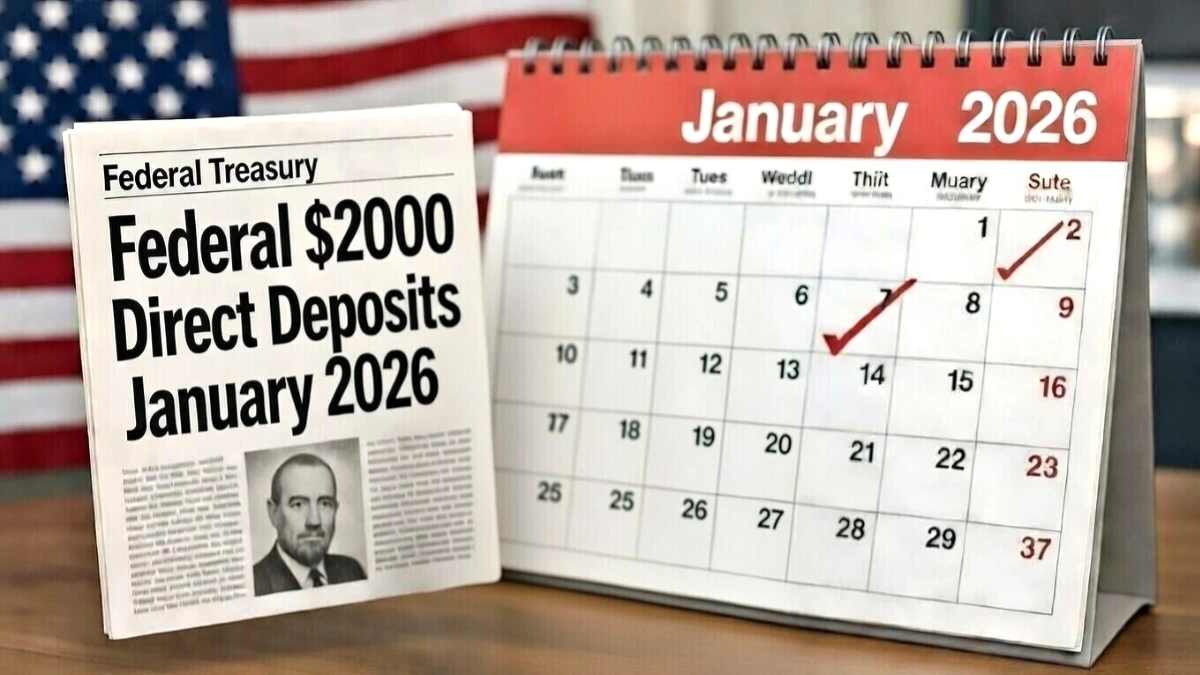
As January 2026 draws near, many Americans are paying close attention to reports about a possible $2,000 federal direct deposit payment. Rising living costs, high medical expenses, and pressure on household budgets have made any form of government support especially important. For eligible individuals, such a payment could help manage essentials like rent, groceries, utilities, and healthcare at the start of the new year.
What the $2,000 Federal Direct Deposit Means
The $2,000 federal direct deposit refers to a government-issued support payment that would be sent electronically to qualifying individuals and families. It is often compared to earlier stimulus checks, but it is expected to follow eligibility rules based on income, tax records, and participation in federal benefit programs. Direct deposit is preferred because it is faster, safer, and avoids delays linked to paper checks.
Why January Is a Key Month for Federal Payments
January is an important period for federal payments because it aligns with new budget cycles, cost-of-living adjustments, and updated benefit schedules. A payment early in the year can help households recover from holiday expenses and manage bills that arrive at the beginning of the year. This timing makes January a logical window for federal financial assistance.
Who May Qualify for the Payment
Eligibility is expected to depend on income levels, tax filing status, and enrollment in certain federal programs. Low- and moderate-income earners are usually prioritized, along with seniors, veterans, and people receiving disability-related benefits. Having recent tax returns on file is important, as federal agencies rely on tax data to confirm eligibility and payment details.
Income Limits and Tax Records Matter
Income thresholds typically decide whether someone qualifies for the full amount, a reduced payment, or no payment at all. Married couples filing jointly often have higher limits. Accurate and up-to-date tax filings are essential, since errors or missing returns can delay or prevent payments.
How Payments Are Usually Sent
Most federal payments are processed through agencies such as the Internal Revenue Service and the Social Security Administration. People who already receive benefits or refunds by direct deposit are likely to receive funds faster. Others may receive paper checks or prepaid cards, which generally take longer.
Expected Timing and Processing
Payments are usually released in batches, meaning not everyone receives funds on the same day. Early to mid-January 2026 is often discussed as a possible window, but exact dates can vary depending on eligibility category and banking institutions.
Staying Safe and Informed
Whenever federal payments are discussed, scams tend to increase. Government agencies do not ask for personal or banking details through unsolicited calls, texts, or emails. Relying on official announcements and verified sources is the safest approach.
Disclaimer
This article is for informational purposes only and does not constitute financial, tax, or legal advice. Federal payment programs, eligibility rules, and timelines may change. Readers should consult official government websites or qualified professionals for the most accurate and personalized information.